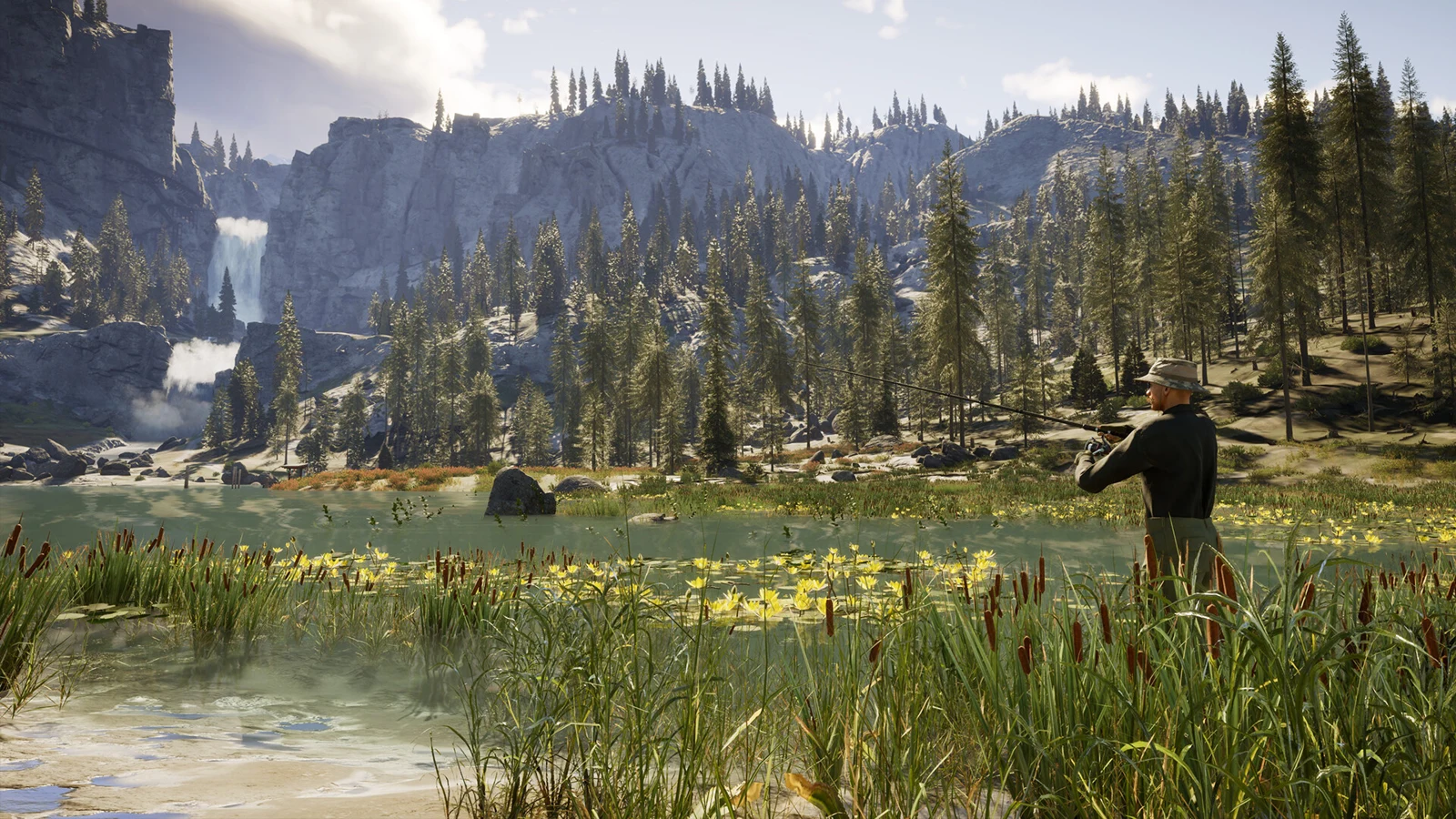
Start with an arrival
When you load into a reserve, resist the temptation to turn the whole landscape into a list of fishing targets. Choose something you want to see: a distant shoreline, a change in elevation or a bend in a route. This is an editorial way to approach The Angler, not a promise of a hidden reward. A destination gives the walk a shape without dictating what you must catch.
Keep a recognisable thread
As you move, notice the features that would help you describe the route to another person. A path can be memorable because of the view it opens, not because it is the shortest option. Stop occasionally and look back. The return journey often becomes easier when you recognise the same landscape from a second direction.
Leave room for a detour
If an interesting patch of water appears along the way, pause there. You do not have to finish the route exactly as imagined. At the end, record the place you enjoyed and one thing you would explore next. The useful outcome might be a favourite outlook rather than a new entry in the catch record.
A practical exercise
Choose a visible destination and write a one-sentence route before moving. After arriving, describe a landmark you would use on the way back. Compare the two descriptions: did you notice the journey itself, or only whether you reached the destination? Keep the landmark for a later visit.